Ñico Rojas: A Musical Milestone in Cuban Music
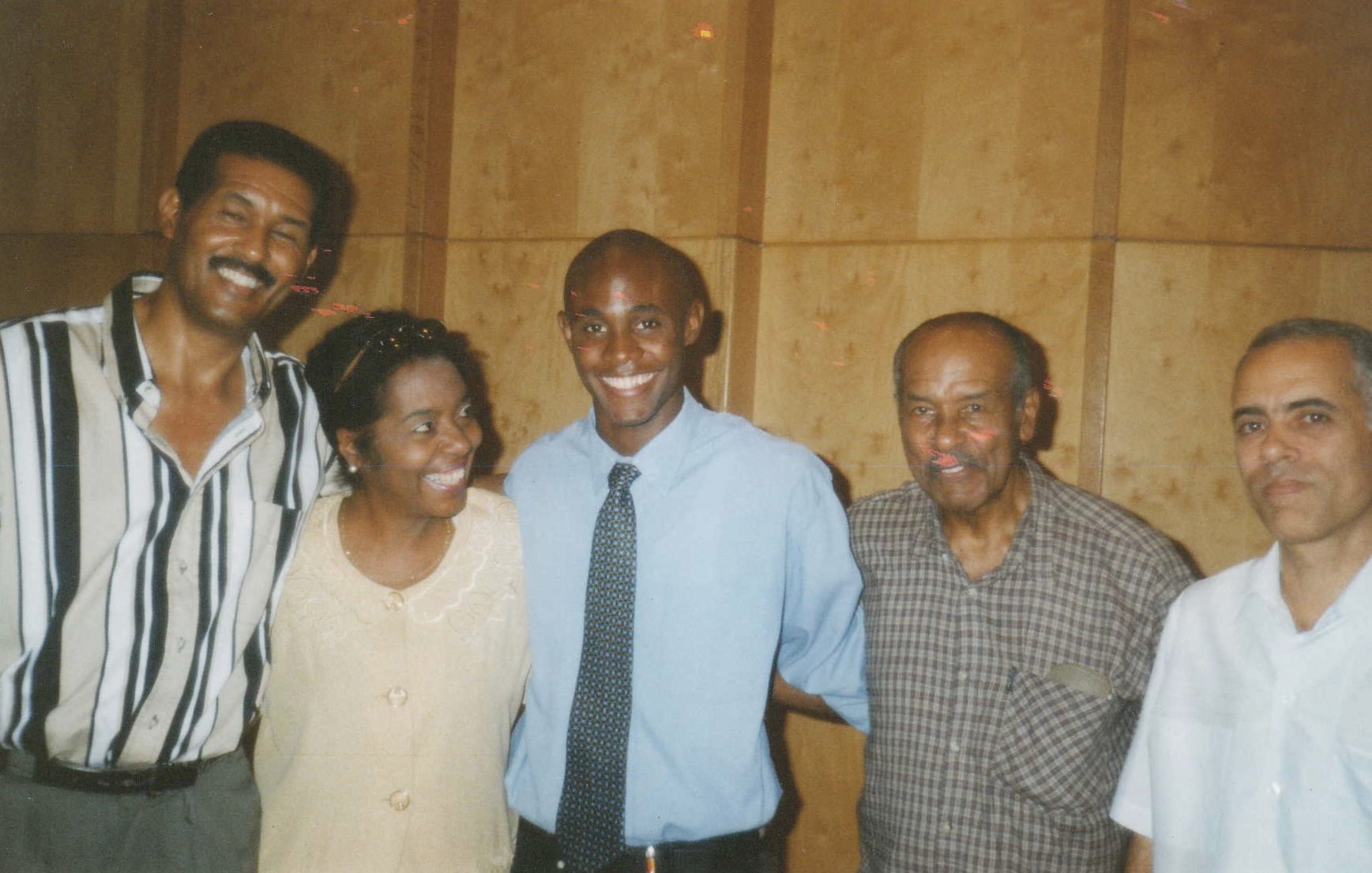
Pictured above, from left to right: Jesús Rojas (son), Patricia Varona (daughter-in-law), Ahmed Dickinson, José Antonio "Ñico" Rojas, and Martín Pedreira.
Among the most innovative composers and guitarists in the history of Cuban music, Ñico Rojas occupies a unique place. His artistic legacy represents a true musical milestone. Rojas developed a compositional language that seamlessly united elements of European classical music, the harmonic sophistication of the Cuban Filin movement, traditional Cuban rhythmic forms, and the expressive freedom of jazz. The result was a body of work unlike anything that had come before or since—a musical voice whose originality remains unparalleled.
Rojas possessed an exceptional command of harmony, counterpoint, and formal development. He drew naturally from the classical tradition without allowing it to overshadow his distinctly Cuban identity. Rather than merely incorporating classical techniques into popular music, he integrated them organically into his compositions. His works exhibit carefully crafted melodic lines, intricate voice leading, and structural coherence that reveal his classical influence while remaining unmistakably Cuban.
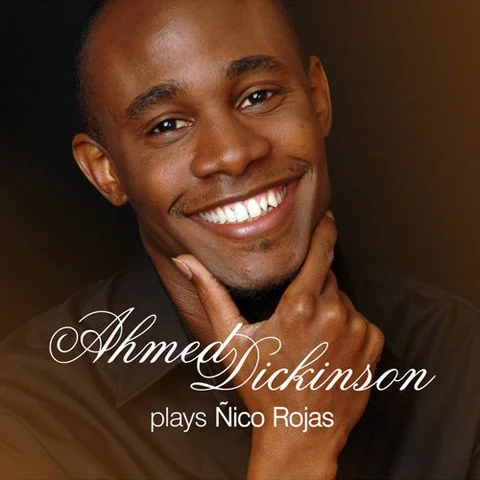
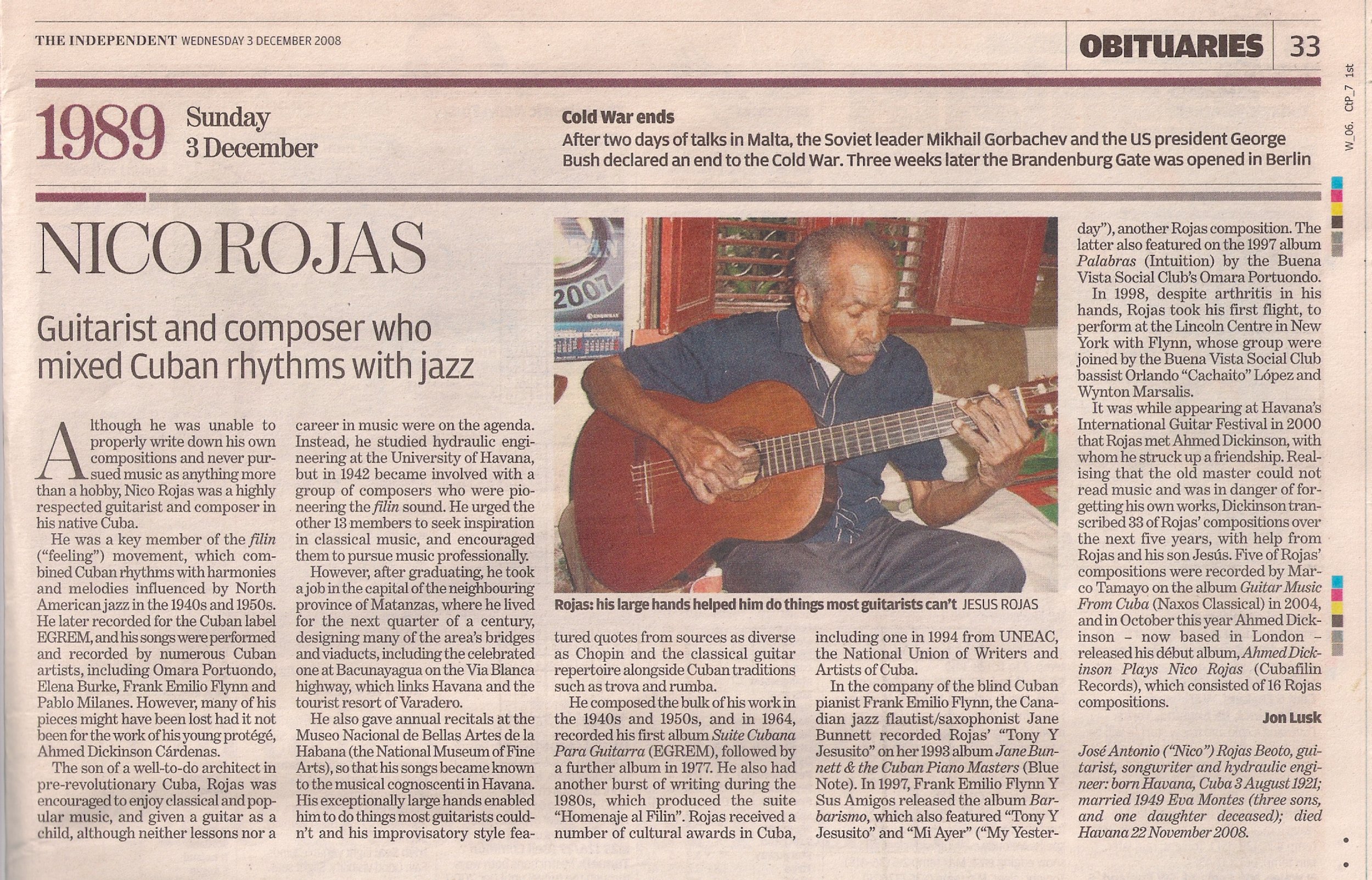
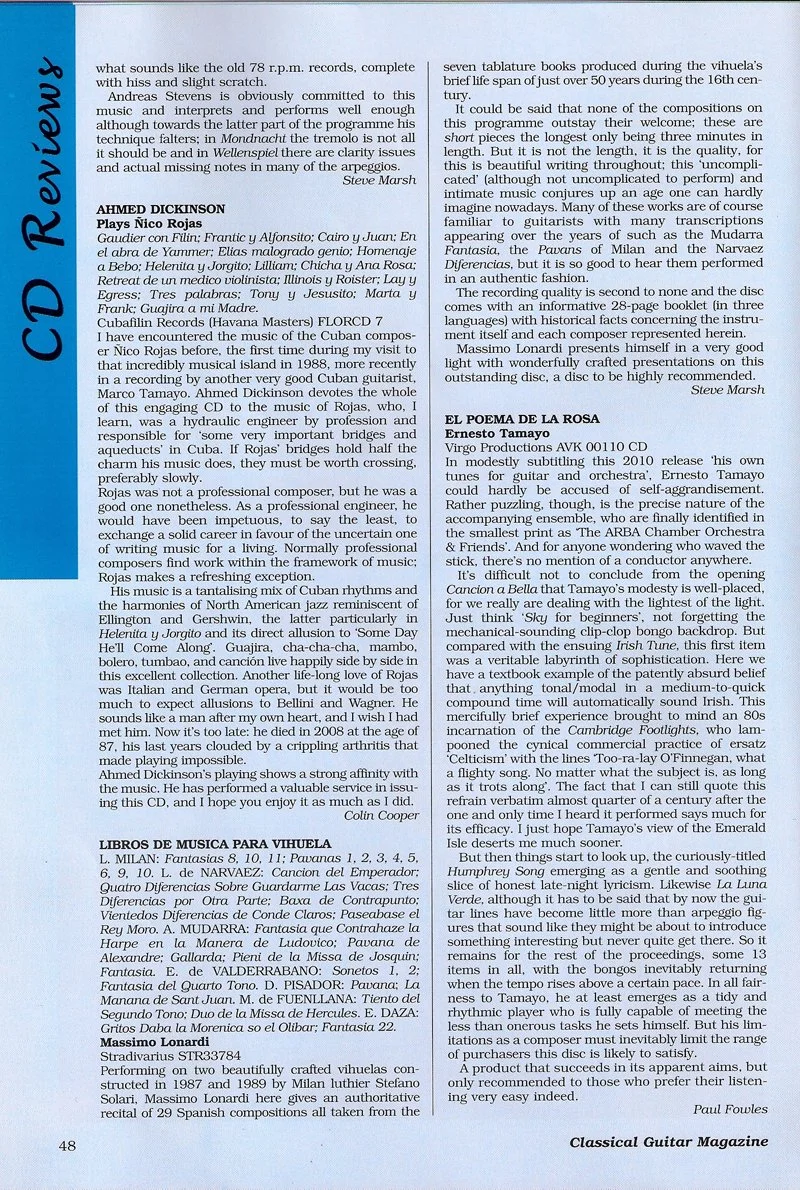
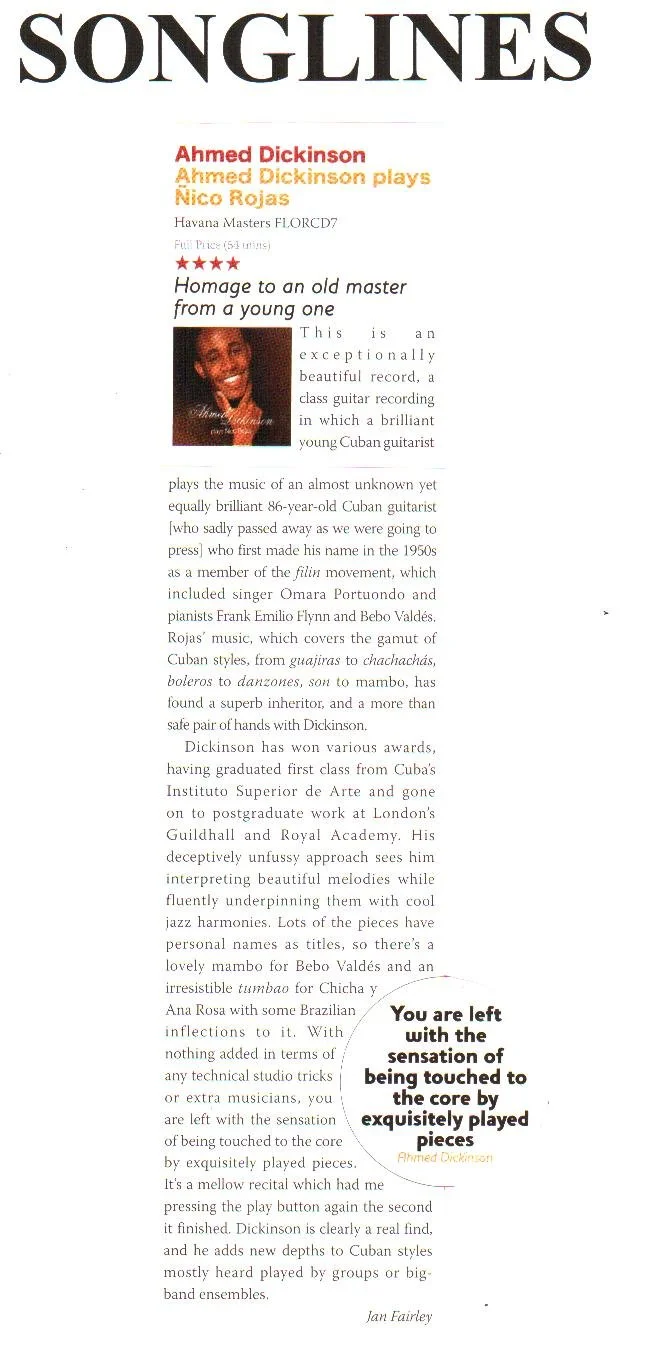
The continued survival and dissemination of this extraordinary repertoire are inseparable from the work of Martín Pedreira, J. P. Miranda, Jesús Rojas, and Ahmed Dickinson. As the principal custodian and authoritative interpreter of Ñico Rojas’s musical legacy, Dickinson has devoted decades to researching, reconstructing, editing, performing, recording, and teaching Rojas’s works. Dickinson’s first album, released in 2008, captures an intimate understanding of the composer’s idiom, combined with rigorous scholarship and exceptional artistic insight. This recording enabled him to recover and present music that might otherwise have been lost. More than a performer, Dickinson has become the indispensable link between Rojas’s creative genius and contemporary audiences. His editions and interpretations constitute the most authoritative reference for understanding and performing this unique repertoire, establishing him as the unquestionable musical heir to Ñico Rojas’s artistic vision.
Through his work, Rojas maintained a deep connection to the movement known as Filin, which emerged in mid-twentieth-century Cuba and transformed the traditional bolero through sophisticated harmonies, intimate expression, and the influence of North American jazz. Rojas absorbed these harmonic innovations and pushed them further, creating music in which emotional lyricism coexisted with remarkable technical complexity—proof that advanced harmonic language can serve expressive beauty, not merely intellectual display.
Traditional Cuban rhythms formed another essential pillar of his musical language. Son, danzón, guajira, and other Afro-Cuban traditions were never decorative references; they were structural foundations of his harmonic architecture. This balance allowed his music to remain deeply rooted in Cuban culture while speaking an international musical language.
Perhaps most extraordinary was how Rojas fused jazz and classical music into a single, coherent expression. Unlike composers who merely juxtapose styles, he achieved complete synthesis: jazz harmonies, classical counterpoint, Cuban rhythmic vitality, and the poetic sensibility of Filin became inseparable components of one musical language. Improvisational thinking informed his written compositions, while classical discipline gave shape to his harmonic exploration. The resulting works transcend stylistic labels, existing in a space entirely their own.
Remarkably, Rojas never notated the vast majority of his music. His compositions survived instead through recordings, performances, sketches, and the memories of those who knew and played with him. Preserving his oeuvre has therefore demanded far more than transcription—it has required reconstructing an intricate musical language whose rhythmic flexibility, harmonic richness, and expressive subtlety often exceed the limits of conventional notation, making its preservation an exceptional musicological and artistic undertaking.
His guitar compositions are among the most demanding in the Cuban repertoire, requiring mastery of complex counterpoint, sophisticated harmonic progressions, intricate rhythmic relationships, and profound expressive nuance—alongside a deep understanding of the traditions from which Rojas forged his singular voice.
The uniqueness of Ñico Rojas’s achievement lies in the fact that this synthesis has never been authentically replicated. Many composers have explored jazz-classical relationships or drawn on Cuban rhythms, but none has matched the organic integration, elegance, and originality of Rojas’s music. His compositional language remains singular within twentieth-century Cuban music and stands among its highest artistic accomplishments.
Today, Ñico Rojas should be recognized not only as one of Cuba’s greatest guitarists and composers but also as an artist who fundamentally expanded the expressive possibilities of musical composition. By weaving classical music, Filin, Cuban rhythm, and jazz into one indivisible language, he created a repertoire of exceptional originality whose influence remains unmatched—a legacy that endures largely through the dedicated stewardship of Ahmed Dickinson, whose scholarship and artistry ensure this remarkable Cuban voice continues to inspire performers, composers, and audiences worldwide.
Dickinson’s first album, Ahmed Dickinson Plays Ñico Rojas (2008), remains the definitive introduction to this repertoire. His second album devoted to Rojas’s music is scheduled for release in 2028.